Science
Science Department Curriculum Intent
In Science we aim to create a classroom culture where students feel safe to ask questions, confident to explore, and inspired to connect scientific ideas to the world around them. Through practical investigation and critical thinking, we challenge learners to develop their understanding of key concepts, while nurturing the emotional and social skills that allow them to thrive. Ultimately, we want all our student to succeed and achieve their full potential.
Kindness underpins our approach: we support each other’s learning, celebrate mistakes as steps toward growth, and show empathy in our scientific inquiries - especially when studying life and the environment.
Key Stage 3 – Being Engaged: Learning with Kindness and Curiosity
At Key Stage 3, our science curriculum is designed to ignite curiosity and foster a lifelong passion for discovery. We promote curiosity by encouraging students to wonder boldly, explore with purpose, and pursue answers with perseverance and imagination.
- Respect is at the heart of our collaborative work - for each other, for diverse viewpoints, and for the natural world we are studying.
- Through reflection, students evaluate their own learning and thinking, and begin to see themselves as part of a wider scientific journey.
- With responsibility, we help learners understand the impact of science on society, equipping them to make informed decisions and take thoughtful action as global citizens.
By the end of KS3, students have strong foundations for future learning - they are kind, curious, and conscientious learners who are ready to meet the challenges of the future with both knowledge and heart.
Key Stage 4 – Being Independent: Taking Responsibility for Learning and Growth
At Key Stage 4, our science curriculum empowers students to become independent, by developing resilience, self-motivation, and the confidence to explore complex ideas critically and creatively. Through structured inquiry and problem-solving, learners are supported in building their scientific understanding and applying it to real-world contexts with purpose and integrity.
- We encourage every learner to take responsibility for their education - recognising that ownership of learning is the first step toward personal and academic growth.
- Respect underpins our learning environment: we value each individual’s contribution, uphold high expectations of behaviour and effort, and foster meaningful collaboration. We also develop respect for science itself - for its methods, its impact, and the ethical considerations it demands.
- We prioritise reflection as an essential part of the learning process. Through honest self-evaluation and feedback, students are encouraged to think deeply about how they learn, why science matters, and how their growing knowledge can shape their futures.
By the end of KS4, students are not only prepared for academic success but to become informed, responsible, and curious citizens, ready to make a positive difference in the world.
Key Stage 5 - Exemplary: Habitually showing Integrity, Reflection, Responsibility and Respect
At Key Stage 5, our science curriculum aspires to develop ‘exemplary learners’ by setting high expectations for independence and rigour, not as a finish line, but as a standard that students internalise and uphold. Scientific excellence is paired with ethical awareness, so students not only know how to explore the world, but they also understand why it matters, and how their work can affect others.
- We encourage thoughtful reflection as a route to growth – enabling students to evaluate evidence critically, refine their thinking, and consider the broader implications of their learning.
- We expect learners to take full responsibility for their progress, owning both the effort and the mindset needed to succeed. They are challenged to lead their own learning while contributing meaningfully to the scientific community around them.
- Respect is cultivated through collaborative learning, open-minded debate, and the appreciation of different perspectives, cultures, and identities – all essential in the diverse world of modern science.
By the end of KS5, our students are not only prepared for the next steps in their academic and professional lives, but also for a future where character and competence go hand in hand and where young people lead by example, and with purpose.
Science Department Ethos
Our science department is a community where responsibility, respect, reflection, and kindness guide not only how we learn but how we grow together.
We uphold responsibility by taking ownership of our actions, our learning, and the way we contribute to both scientific discovery and a just society. We approach every question with integrity, curiosity, and a commitment to doing what is right.
We show respect by listening carefully, valuing different viewpoints, and honouring the collaborative nature of scientific progress. Everyone's voice matters, and through mutual respect, we create a space where ideas can flourish.
We practice reflection to deepen understanding and refine our thinking. We ask not just "what did I learn?" but also "how can I improve?" and "how can my learning serve the world?"
And above all, we lead with kindness. We support each other through challenges, celebrate our successes with generosity, and treat every person - and living system we study - with care and compassion.
Together, we build a culture where science is not just learned, but lived - with heart and with purpose.
Click on the links below for Biology
careers linked to biology
- General Practitioner (GP): Provides primary healthcare and treats a variety of conditions.
- Surgeon: Performs operations to treat injuries, diseases, and deformities.
- Nurse: Provides patient care and supports medical teams.
- Midwife: Assists with childbirth and prenatal care.
- Radiologist: Uses imaging techniques to diagnose and treat diseases.
- Anaesthetist: Administers anaesthesia and manages pain during surgeries.
- Environmental Scientist: Works to protect natural resources and ecosystems.
- Biologist: Researches living organisms and their environments.
- Geneticist: Focuses on heredity and DNA.
- Medical Scientist: Develops treatments and studies diseases.
- Epidemiologist: Investigates disease patterns and prevention.
- Biophysicist: Combines biology and physics to study living systems.
- Biology Teacher: Teaches Biology at various educational levels, from KS3 to University.
assessment
In Biology we have a mixture of activities that allow us to assess students’ learning. These include assessment throughout the lessons, with discussions, quizzes and exam questions. There will be occasions where students self-assess their work, and others where peer-assessment is conducted. Both will help students understand their weaknesses and strengths, and how to move forward.
We also have teacher-assessed tasks, which include six-mark questions, knowledge assessment quizzes, and end of unit tests, where knowledge, skills and application in new context are tested. In years 10 and 11, students also complete mock exams.
Further reading
Key Stage 3
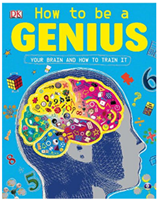
How to Be a Genius by DK Publishing
Explore the brain and body through puzzles, challenges, and quirky facts. A great pick if you love interactive learning.
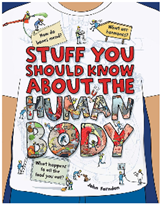
The Stuff You Should Know by John Farndon
Covers everything from cells and DNA to evolution and ecosystems. Written in a fun, accessible style with illustrations and diagrams.
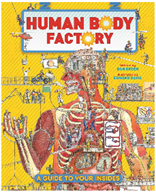
The Human Body Factory by Dan Green
Imagine your body as a bustling factory! This book explains organs and systems with humour and cartoon-style illustrations.
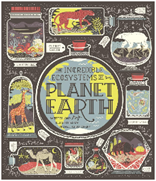
The Incredible Ecosystems of Planet Earth by Rachel Ignotofsky
A beautifully illustrated guide to biodiversity and habitats. Combines art and science to celebrate the natural world.
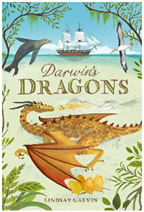
Darwin’s Dragons by Lindsay Galvin
A fictional adventure inspired by Darwin’s voyage. Blends historical science with fantasy - great for cross-curricular reading.
GCSE
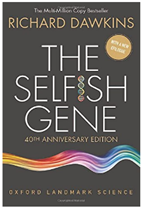
The Selfish Gene by Richard Dawkins
A groundbreaking look at evolution and genetics, introducing the idea of genes as the drivers of natural selection. Accessible and thought-provoking, especially if you are interested in evolutionary biology.
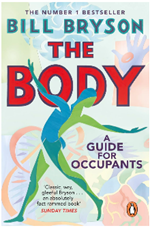
The Body: A Guide for Occupants by Bill Bryson
A witty and informative tour of the human body, packed with surprising facts and engaging storytelling. Great for students who enjoy science with a side of humour.
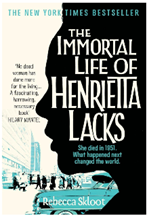
The Immortal Life of Henrietta Lacks by Rebecca Skloot
The true story of the woman behind the HeLa cells - used in countless scientific breakthroughs. Combines biology, ethics, and history in a gripping narrative.
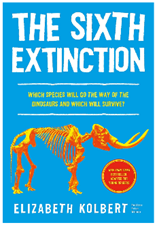
The Sixth Extinction by Elizabeth Kolbert
Investigates the ongoing mass extinction caused by human activity. Blends ecology, evolution, and environmental science in a compelling way.
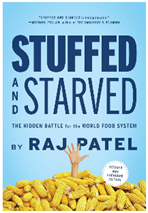
Stuffed and Starved by Raj Patel
Explores the global food system and its biological, environmental, and social impacts. A great cross-curricular read linking biology with geography and ethics.
LEARNING JOURNEY

REVISION RESOURCES
Key Stage 3
Cells and Organisation
Ecosystems and Interdependence
Health and Immunisation
Human Reproduction
Inheritance and Evolution
Photosynthesis
Plant Reproduction
Respiration
Combined Science
B1 Cell BiologyB2 Organisation
B3 Infection and Response
B4 Bioenergetics
B5 Homeostasis and Response
B6 Inheritance, Variation and Evolution
B7 Ecology
Separate Sciences
B1 Cell Biology
B2 Organisation
B3 Infection and Response
B4 Bioenergetics
B5 Homeostasis and Response
B6 Inheritance, Variation and Evolution
B7 Ecology
Click on the links below for Chemistry
Careers linked to Chemistry
- Organic Chemist
Designs and synthesises carbon‑based molecules used in medicines, plastics, and consumer products. - Inorganic Chemist
Studies metals, minerals, and non‑carbon compounds to develop catalysts, coatings, and advanced materials. - Biochemist
Examines chemical processes in living organisms, contributing to medicine, genetics, and biotechnology. - Materials Scientist
- Creates and tests new materials (polymers, ceramics, composites) for technology, engineering, and manufacturing.
- Pharmacologist
Studies how drugs interact with biological systems to ensure safety and effectiveness. - Chemical Engineer
Applies chemistry, physics, and engineering to design processes for large‑scale production of chemicals and materials. - Formulation Chemist
Develops products like cosmetics, paints, detergents, and food additives by blending chemicals into stable mixtures. - Environmental Chemist
Studies pollutants in air, water, and soil to help protect ecosystems and public health. - Water Quality Scientist
Monitors and analyses water sources to ensure they are safe for consumption and the environment. - Water Quality Scientist
Monitors and analyses water sources to ensure they are safe for consumption and the environment. - Atmospheric Chemist
Investigates the chemical composition of the atmosphere, including climate‑related gases and pollutants. - Chemistry Teacher / Lecturer
Teaches chemistry at secondary or university level, inspiring the next generation of scientists. - Forensic Scientist
Analyses chemical evidence from crime scenes, such as toxins, drugs, or trace materials.
assessment
In Chemistry, we have a mixture of activities that allow us to assess students’ learning. These include assessment throughout the lessons, with discussions, quizzes and exam questions. There will be occasions where students self-assess their work, and others where peer-assessment is conducted. Both will help students understand their weaknesses and strengths, and how to move forward.
We also have teacher-assessed tasks, which include six-mark questions, knowledge assessment quizzes, and end-of-unit tests, where knowledge, skills and application in new contexts are tested. In Years 10 and 11, students also complete mock exams.
Further reading
KS3
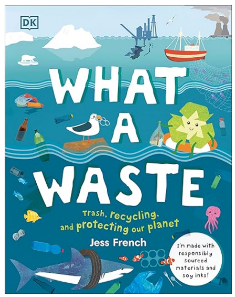
What a Waste, by Jess French
A vibrant, eye‑opening look at the science behind rubbish, recycling, and pollution. This book helps students see how chemistry shapes the materials we use every day — and how smart science can protect our planet.
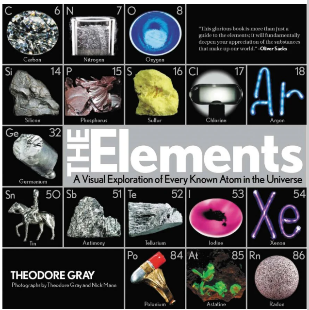
The Elements: A Visual Exploration of Every Known Atom in the Universe, by Theodore Gray
A stunning tour of the periodic table, filled with photographs and fascinating facts. Each element becomes a character with its own story, making chemistry feel alive, surprising, and wonderfully visual.
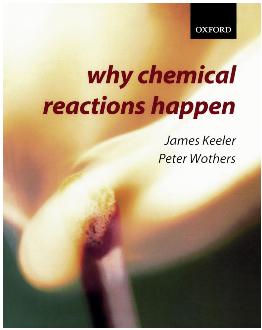
Why Chemical Reactions Happen (Young Readers Edition), by James Keeler & Peter Wothers
A clear, friendly introduction to the “why” behind chemical reactions. With simple explanations and clever analogies, this book helps students understand energy changes, particles, and the forces that drive chemistry.
GCSE
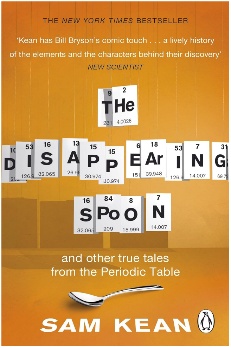
The Disappearing Spoon, by Sam Kean
A lively tour of the periodic table told through strange, funny, and sometimes shocking stories about the elements. Kean shows how chemistry has shaped everything from art to warfare, making the periodic table feel like a cast of unforgettable characters rather than a list to memorise.
Napoleon’s Buttons, by Penny Le Couteur & Jay Burreson
This book explores seventeen molecules that changed the course of human history, from spices that sparked global exploration to medicines that transformed public health.
Stuff Matters, by Mark Miodownik
A beautifully written celebration of the materials that make up our everyday world. Miodownik unpacks the science behind steel, chocolate, plastic, glass, and more, revealing how their microscopic structures give rise to their remarkable properties.
Learning Journey
Click on the Chemistry Learning Journey to view.

Revision resources
Key Stage 3
Acids and Alkalis Knowledge Organiser
Atoms and the Periodic Table
Chemical Reactions
Earth and the Atmosphere
Materials and Recycling
KS3 States of Matter
KS4 Combined Science
C1 Atomic Structure and the Periodic Table – Foundation and Higher
C2 Bonding Structure and Properties of Matter
C3 Foundation Quantitative Chemistry
C3 Higher Quantitative Chemistry
C4 Chemical Changes
C5 Energy Changes
C6 The Rate and Extent Of Chemical Change
C7 Organic Chemistry
C8 Chemical Analysis
C9 Chemistry Of The Atmosphere
C10 Using Resources
KS4 Separate Science
C1 Atomic Structure and The Periodic Table
C2 Bonding, Structure and The Properties of Matter
C3 Quantitative Chemistry
C4 Chemical Changes
C5 Energy Changes
C6 The Rate and Extent of Chemical Reactions
C7 Organic Chemistry
C8 Chemical Analysis
C9 Chemistry of The Atmosphere
C10 Using Resources
Click on the links below for Physics
careers linked to Physics
- Physicist
Studies the laws of matter, energy, space, and time to understand how the universe works. - Astrophysicist
Investigates stars, planets, galaxies, and cosmic phenomena using physics and astronomy. - Nuclear Physicist
Studies atomic nuclei and radiation, contributing to energy, medicine, and national security. - Mechanical Engineer
Designs and builds machines, engines, and mechanical systems using principles of motion and energy. - Electrical Engineer
Works with electricity, electronics, and electromagnetism to create circuits, devices, and power systems. - Aerospace Engineer
Designs aircraft, spacecraft, satellites, and propulsion systems. - Robotics Engineer
Develops robots and automated systems that combine mechanics, electronics, and computing. - Radiographer
Uses imaging technologies to diagnose and monitor medical conditions. - Biomedical Engineer
Designs medical devices, prosthetics, and diagnostic equipment. - Renewable Energy Engineer
Develops technologies for solar, wind, hydro, and other sustainable energy sources. - Geophysicist
Studies the Earth’s structure using physics to support environmental monitoring, oil exploration, and natural hazard prediction. - Defence Scientist
Develops technologies for national security, including sensors, materials, and detection systems. - Physics Teacher / Lecturer
Teaches physics at secondary or university level, helping students understand complex concepts.
assessment
In Physics, we have a mixture of activities that allow us to assess students’ learning. These include assessment throughout the lessons, with discussions, quizzes and exam questions. There will be occasions where students self-assess their work, and others where peer-assessment is conducted. Both will help students understand their weaknesses and strengths, and how to move forward.
We also have teacher-assessed tasks, which include six-mark questions, knowledge assessment quizzes, and end-of-unit tests, where knowledge, skills and application in new contexts are tested. In Years 10 and 11, students also complete mock exams.
Further reading
KS3
The Way Things Work Now, by David Macaulay
A brilliantly illustrated guide to the physics behind everyday machines. From simple levers to modern digital technology, Macaulay breaks down how things function in a way that feels playful and intuitive.
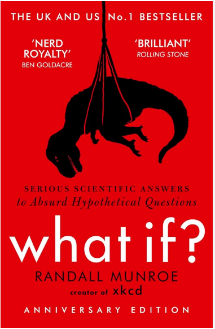
What If? by Randall Munroe
A collection of hilarious and thought‑provoking answers to impossible questions, all explained using real physics. Munroe’s simple drawings and clear reasoning make big ideas, like energy, forces, and motion, feel accessible and fun. Ideal for curious minds who enjoy asking “What would happen if…?”
The Usborne Illustrated Dictionary of Physics
A colourful, student‑friendly reference packed with diagrams, definitions, and examples. It helps build confidence with key concepts such as electricity, waves, and forces, making it a great companion for homework, revision, or independent exploration.
GCSE
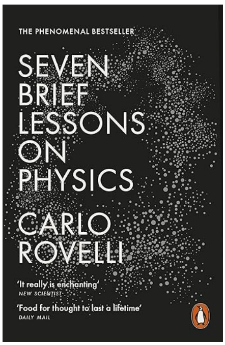
Seven Brief Lessons on Physics, by Carlo Rovelli
A beautifully clear introduction to some of the biggest ideas in modern physics, from relativity to quantum theory. Rovelli explains complex concepts with elegance and simplicity, giving a glimpse of the fascinating science that lies beyond the curriculum.
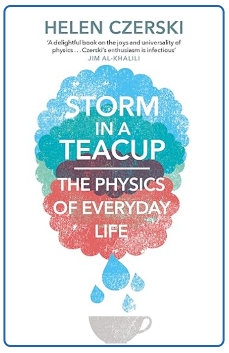
Storm in a Teacup: The Physics of Everyday Life, by Helen Czerski
Czerski uncovers the physics hidden in everyday objects and moments: popcorn popping, kettles boiling, bicycles moving. Her warm, accessible explanations help connect classroom ideas about forces, energy, and waves to the real world around them.
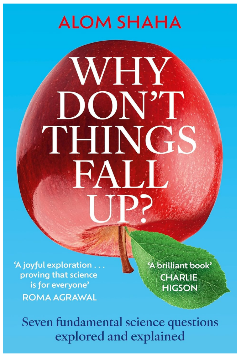
Why Don’t Things Fall Up? by Alom Shaha
A friendly, engaging exploration of the fundamental principles that underpin physics. Shaha tackles big questions about forces, electricity, energy, and the universe in a way that builds confidence and curiosity, making it ideal for students who want to deepen their understanding.
LEARNING JOURNEY

REVISION RESOURCES
Key Stage 3
Electricity and Magnetism
Energy
Forces
Motion and Pressure
Space
Waves
Combined Science
P1 Energy
P2 Electricity
P3 Particle Model of Matter
P4 Atomic Structure
P5 Forces
P6 Waves
P7 Magnetism and Electromagnetism
Separate Sciences
P1 Energy
P2 Electricity
P3 Particle Model of Matter
P4 Atomic Structure
P5 Forces
P6 Waves
P7 Magnetism and Electromagnetism
P8 Space Physics